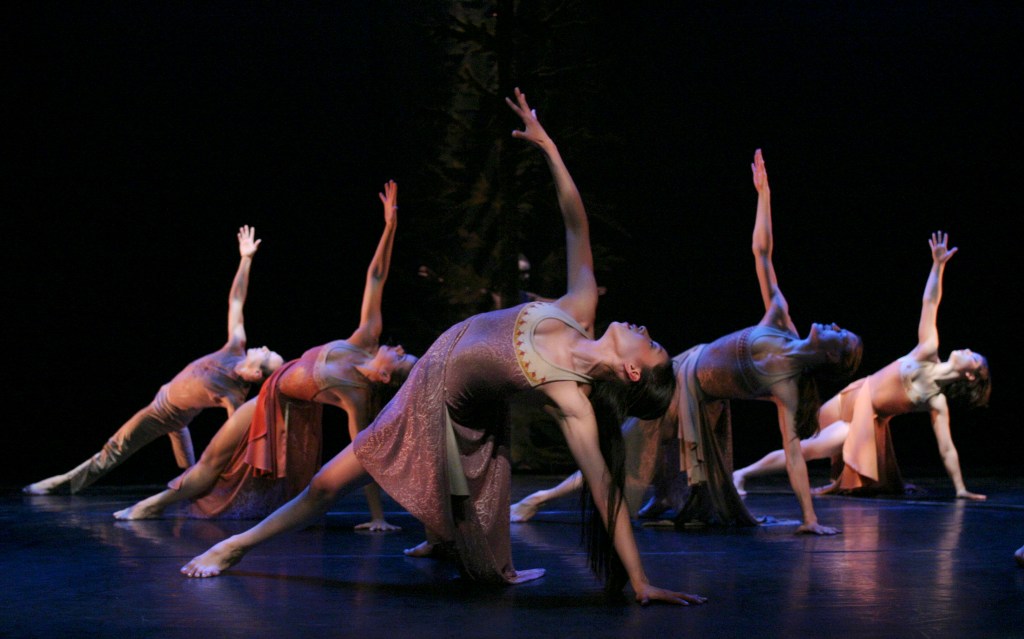
Contemporary Dance in Indian Dance has a relatively short history. Since the perception of ‘modern’ or ‘contemporary’ can vary from dancer to dancer, this dance form cannot be defined as easily as the classical dance styles of India. It is also not codified in a detailed manner, as are the classical styles. Contemporary Indian Dance delineates a new language of dance – multi-layered and multi-vocal – in India and the diaspora. This language unfolds at the intersection of classical Indian dance forms with yoga, pan-Asian dance and martial arts traditions as well as modern and postmodern dance, and theatrical tools that result in hybrid dance creations. Cutting-edge themes – ethnicity, and gender – are inspired by artists’ geographical locations in the global North or South. This article focuses on Pundit Uday Shankar and his contribution to Indian Contemporary Dance.  Pt. Uday Shankar is revered as “founder of modern dance” in India did not originally have any kind of background in dance. Uday Shankar (1900–1977), the older brother of the renowned musician Ravi Shankar, belonged to a Rajasthani family with origins in what is now Bangladesh. He was originally interested in illustrative art and painting. For a while he studied law before he became an amateur impresario. In 1920 he went to London to study at the Royal College of Art. It was the period of “Orientalism” in Europe. Anything that was thought to have something to do with the “Exotic East” was highly fashionable. Uday Shankar performed as an “Indian dancer” at one of the charity events organised by his father in London. Among the spectators was also Anna Pavlova (1882–1931), the most famous Russian ballerina of the time. Pavlova also had ambitions to create her own orientalistic choreographies and she chose Uday Shankar to be her partner. Their co-production, the Krishna-Radha ballet, had a highly successful première at the Royal Opera House, Covent Garden, in 1923. Later they also produced the ballets Ajanta Frescoes and Oriental Impressions. In Europe and in America Uday Shankar first of all embraced the prevalent Western stage aesthetics with all the possibilities of stage décor and electric lighting. He worked very much along the same lines as did the Western artists trying to capture the romantic conception of Oriental Mysticism in their creations. They included, among many others, Ruth Saint Denis, La Meri, and the most famous of them all, the notorious Mata Hari. Here is an actual poster from his performance by Tribe Brothers (printer), Princes Theatre London, England, early 20th century.
  Uday Shankar was a celebrity when he returned to India in 1927. He went back to Europe in 1937 and founded Europe’s first Indian dance troupe in Paris. At the same time as Diaghilev’s Ballets Russes and Rolf de Maré’s Ballet Suédois toured the world with repertoires including oriental numbers, Uday Shankar performed seven years throughout Europe and America with his group called Uday Shankar and his Hindo Ballet. In 1960 Uday Shankar settled in Calkutta, where he established his Uday Shankar Centre of Dance in 1965. His influence can be mainly recognised in the spread of the conception of Indian Ballet, in which various Indian systems of movement are adapted to Western stage aesthetics. The institute established by Uday Shankar is now defunct, but his legacy survives in the work of his children and his many disciples, who have their own troupes and students. Today, in addition to the line established by Uday Shankar, there are other practitioners of Modern Dance in India who belong to other schools.
  As Artistes we are all indebted to Pundit Uday Shankar for his contribution to Indian Dance. With growing interaction between dance practitioners all over the country and the world, and awareness of important contemporary issues, many classical dancers have also stepped into the realm of contemporary dance through exploration of one or many dance styles. Contemporary Indian Dance encompasses a wide range of dance activities currently performed in India and around the world. It includes choreography for Indian cinema, modern Indian ballet and experiments with existing classical and folk forms of dance by various artists.
Indian Contemporary Dance inspired by Indian & Western ballet

Indian Contemporary Dance inspired by Indian Classical & Folk Dance

Indian Contemporary Dance used in Modern Bollywood Dance to Ballads and Sufi tracks as illustrated by Shampa Sonthalia & Yash Pandya performing to the 2013 super hit song Tum Hi Ho of Aashiqui 2.
 Nateshwar Dance Academy