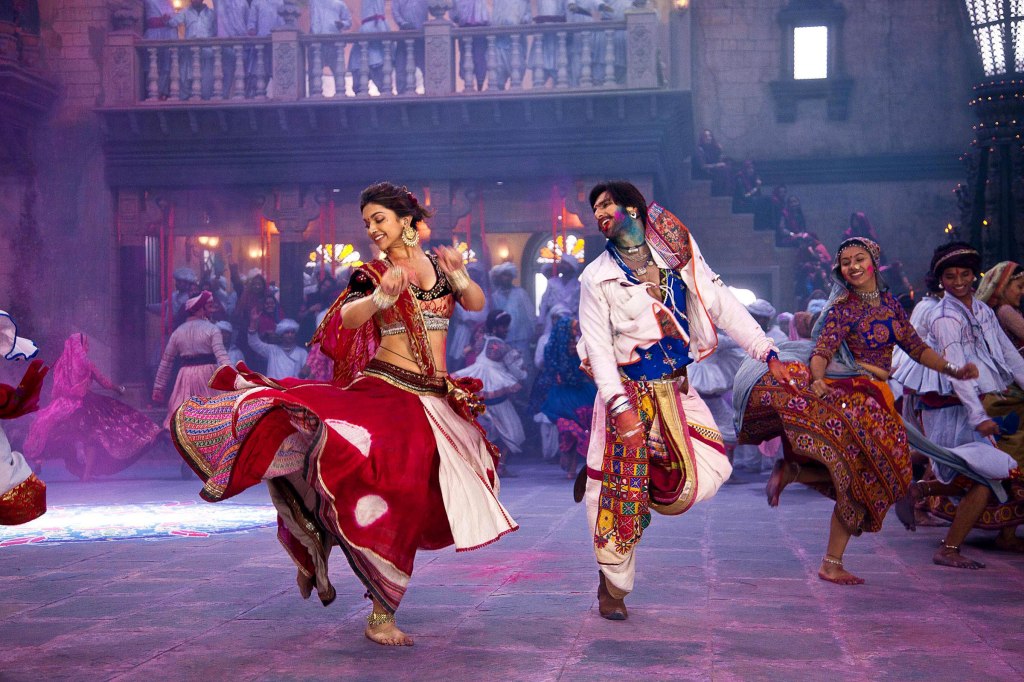

Garba
This feature is about the origin and history of Garba & Dandiya Raas. Garba is a Gujarati folk dance celebrated during Navratri, a celebration lasting nine nights. Garba songs typically revolve around the subjects of Lord Krishna or the nine goddesses. The word Garba comes from the Sanskrit word for womb and so implies gestation & life. Traditionally, the dance is performed around a clay lantern with a light inside, called a Garbha Deep. This lantern represents life. The dancers thus honour Durga, the feminine form of divinity.
Garba is performed in a circle as a symbol of the Hindu view of time. The rings of dancers revolve in circles- As the cycle of time revolves, from birth, to life, to death and again to rebirth, the only thing that is constant is the Goddess, that one immovable symbol in the midst of all of this unending and infinite movement. The dance symbolises that God, represented in feminine form, is the only thing that remains unchanging in a constantly changing universe.
The Garbha Deep has another symbolic interpretation. The vessel itself is a symbol of the body, within whom Divinity (in the form of the Goddess) resides. Garba is danced around this symbol to honor the fact that all humans have the Divine energy of Devi within them. Garba is now being appreciated worldwide.

The traditional costume of the Garba dancer is red, pink, yellow, orange, and brightly colored Chanya choli or ghagra choli; odhini with bandhani (tie-die), abhla (big mirrors) or with thick Gujarati borders. They also wear heavy jewelry, such as 2-3 necklaces, sparkling bangles, waist belts and long oxidized earrings.

Dandiya Raas – A devotional form of Garba
The Dandiya Raas dance originated as devotional Garba dances, which were performed in Goddess Durga’s honour. This dance form is actually the staging of a mock-fight between Goddess Durga and Mahishasura, the mighty demon-king. This dance is also nicknamed ‘The Sword Dance’. The sticks of the dance represent the sword of Goddess Durga. The origin of these dances can be traced back to the life of Lord Krishna. Today, Raas is not only an important part of Navaratri in Gujarat.
Originating as devotional Garba dances, which were always performed in Durga’s honour, this dance form is actually the staging of a mock-fight between the Goddess and Mahishasura, the mighty demon-king, and is nicknamed “The Sword Dance”. During the dance, dancers energetically whirl and move their feet and arms in a complicated, choreographed manner to the tune of the music with various rhythms. The dhol is used as well as complementary percussion instruments such as the dholak, tabla, bongos and others.
The sticks (dandiyas) of the dance represent the swords of Durga. The women wear traditional dresses such as colorful embroidered choli, ghagra and bandhani dupattas (traditional attire) dazzling with mirror work and heavy jewellery. The men wear special turbans and Kurtas in many colours.
Garba is performed before Aarti (worshipping ritual) as devotional performances in the honor of the Goddess, while Dandiya is performed after it, as a part of merriment. Men and women join in for Dandiya Raas, and also for the Garba. The circular movements of Dandiya Raas are much more complex than those of Garba.
May you be blessed with Happiness, Joy, Prosperity, Progress & Wisdom. Jai Mata Di – Shubh Navaratri to all Hindu friends.

 Nateshwar Dance Academy